Scholarship
What is held in memory, and what is done with it.
Memorisation in this tradition is not an end. It is the condition for everything after it: explanation, chanting method, composition. He can recite the अष्टाध्यायी, and he can tell you what a sūtra means and why it sits where it does.

The texts
Held by heart.
-
Age five
श्रीमद्भगवद्गीता
All seven hundred verses, memorised by self study. Since then, more than five hundred complete parayanas, start to finish.
Kaṇṭhastha
-
Age eight
Pāṇini's अष्टाध्यायी
Roughly four thousand sūtras, with the grammar and the meaning, not the sound alone.
Kaṇṭhastha
-
Age eight
अमरकोशः, Amarakośa
The complete classical Sanskrit lexicon in verse, all three kāṇḍas.
Kaṇṭhastha
-
Vedic chanting
Ghana Pāṭha, and Ghanapāṭhī of Śrī Rudram
Ghana Pāṭha is the most intricate of the Vedic recitation patterns, in which the words of a line are permuted and repeated in a fixed order so that the text cannot drift across generations. Kṛṣṇa Yajurveda.
Mastery
-
Beyond
Hundreds of Vedic sūktas and Sanskrit stotras
Including Viṣṇu Sahasranāma, Lalitā Sahasranāma, Śivatāṇḍava Stotra and Ekātmatā Stotra.
Recited
-
 YouTube
The complete श्रीमद्भगवद्गीता, chanted at five
YouTube
The complete श्रीमद्भगवद्गीता, chanted at five
-
 YouTube
श्री रुद्रं havan, with Ghana Pāṭha
The Kṛṣṇa Yajurveda recitation pattern, in full.
YouTube
श्री रुद्रं havan, with Ghana Pāṭha
The Kṛṣṇa Yajurveda recitation pattern, in full.
-
 Own channel
Ghana Pāṭha of श्री रुद्रम्, the most intricate of the Vedic patterns
The words of each line permuted and repeated in fixed order, so that the text cannot drift.
Own channel
Ghana Pāṭha of श्री रुद्रम्, the most intricate of the Vedic patterns
The words of each line permuted and repeated in fixed order, so that the text cannot drift.
-
 YouTube
एकात्मता स्तोत्र, Ekātmatā Stotra, at five
YouTube
एकात्मता स्तोत्र, Ekātmatā Stotra, at five
-
 YouTube
A Sanskrit poem on India, recited
YouTube
A Sanskrit poem on India, recited
-
 YouTube
A Sanskrit tribute to Ādi Śaṅkarācārya, recited
YouTube
A Sanskrit tribute to Ādi Śaṅkarācārya, recited
Eleven scripts
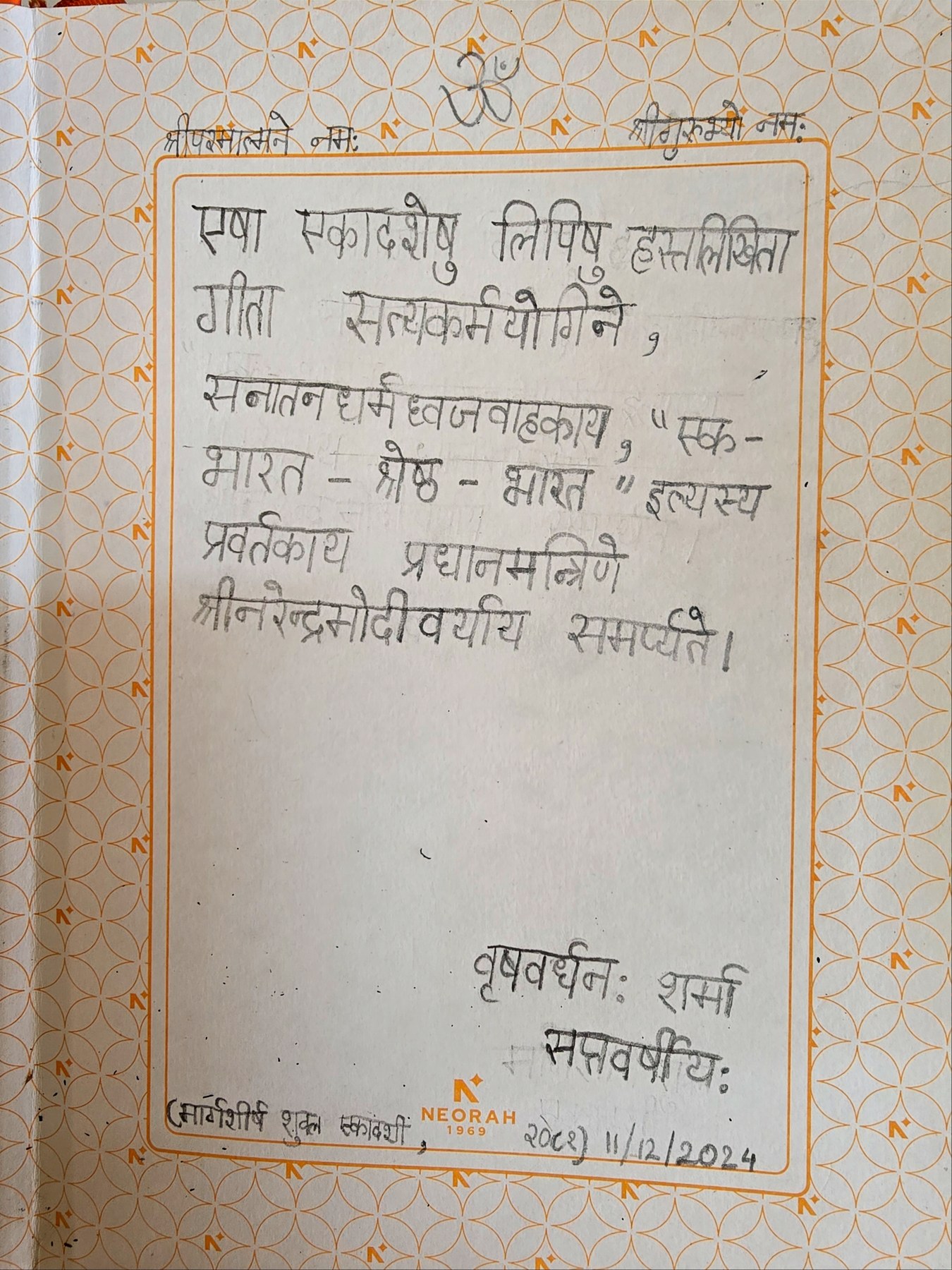
The Gītā, written out by hand, eleven times over. Three times.
He can read and write thirteen Indian scripts. To make something of that, he has handwritten the complete Bhagavad Gītā in eleven of them: Devanagari, Bengali, Gujarati, Kannada, Tamil, Telugu, Malayalam, Odia, Assamese, Gurmukhi and Roman transliteration. Seven hundred verses, eleven times over, by hand.
Not once. Three times. Three separate manuscripts, each the complete Gītā written out by hand across eleven scripts, the first of them finished at the age of seven.
The work is dedicated to the Prime Minister as an एक भारत श्रेष्ठ भारत offering toward Viksit Bharat 2047, and he intends to present it in person. The dedication itself is written in Sanskrit, in his own hand.



The pages themselves
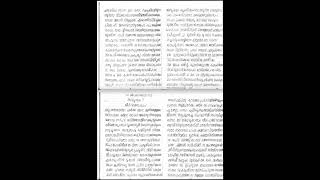
One text, eleven hands.
A page from each of the eleven scripts, as he wrote them. Open any one to read it at full size.

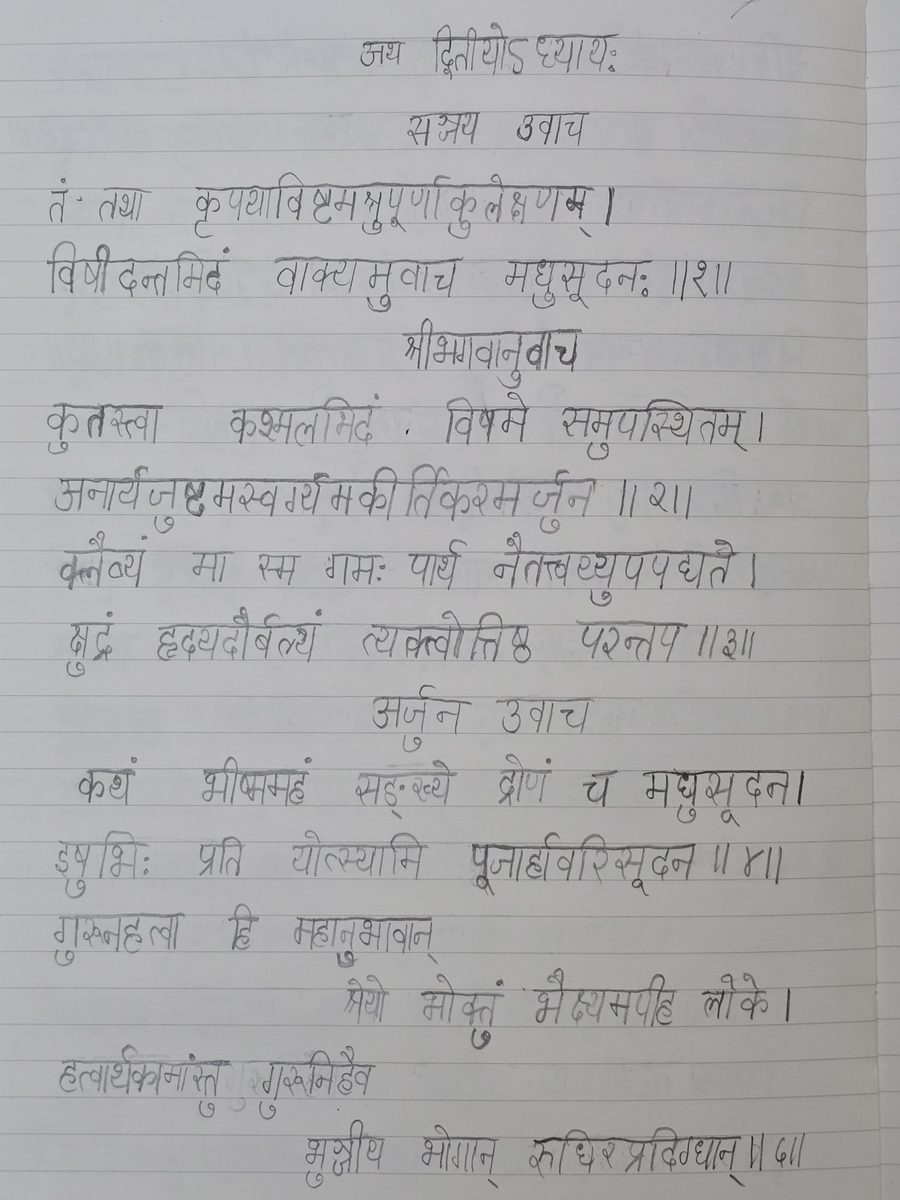
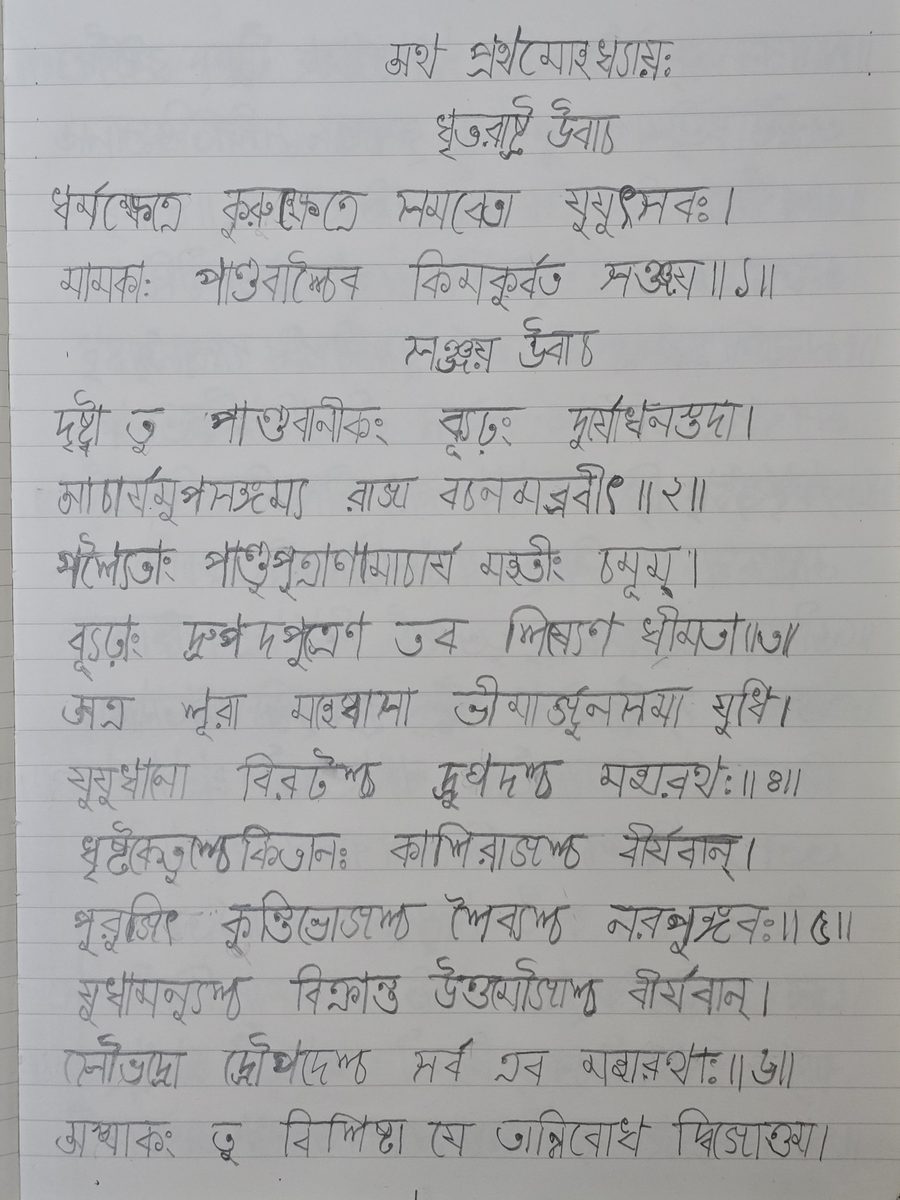
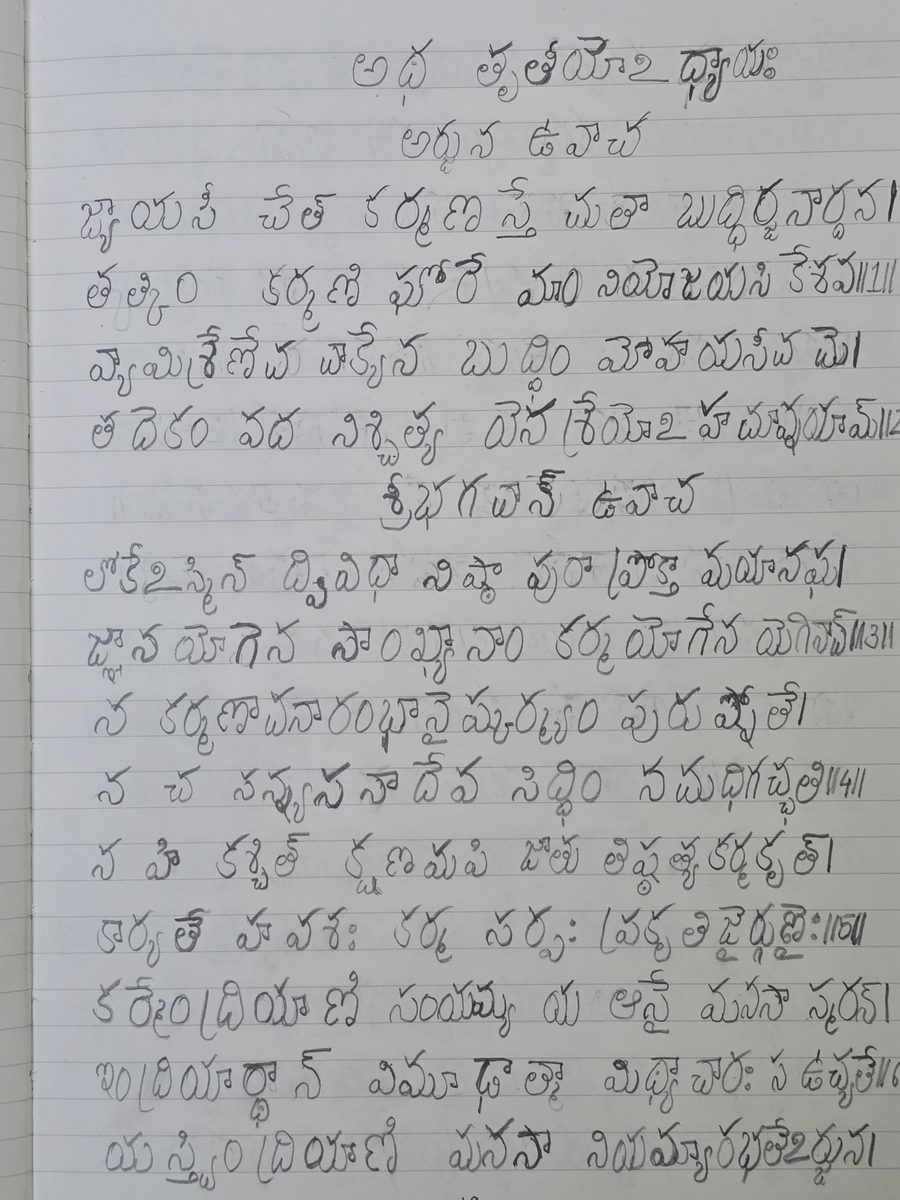
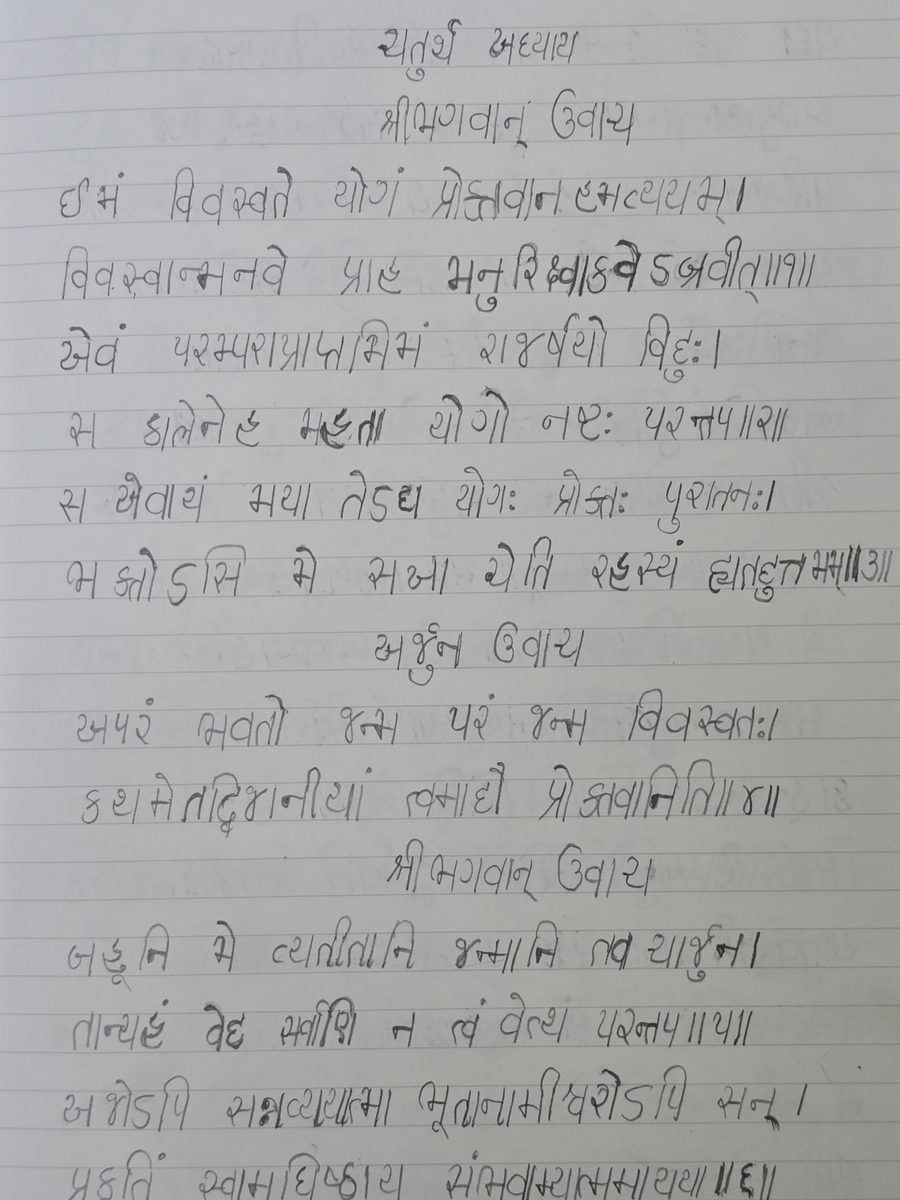
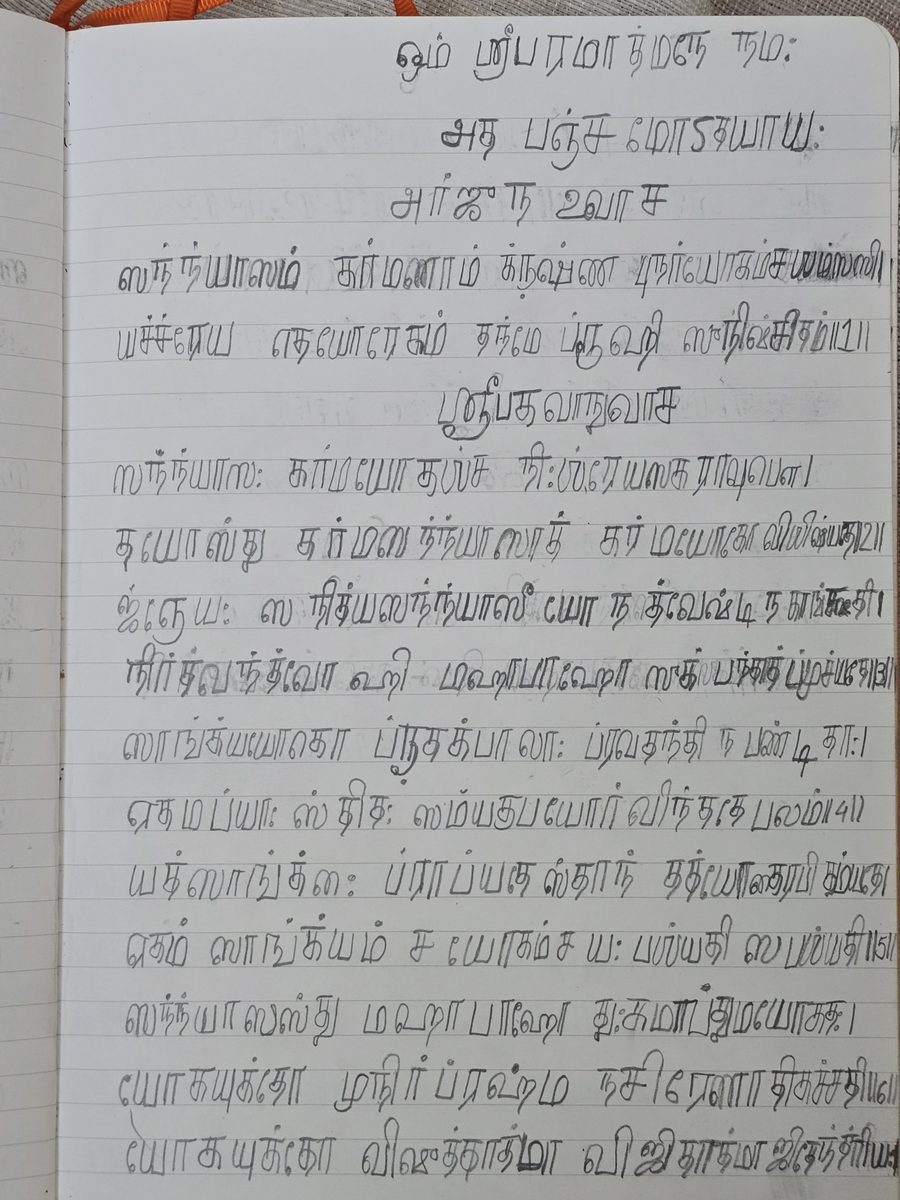
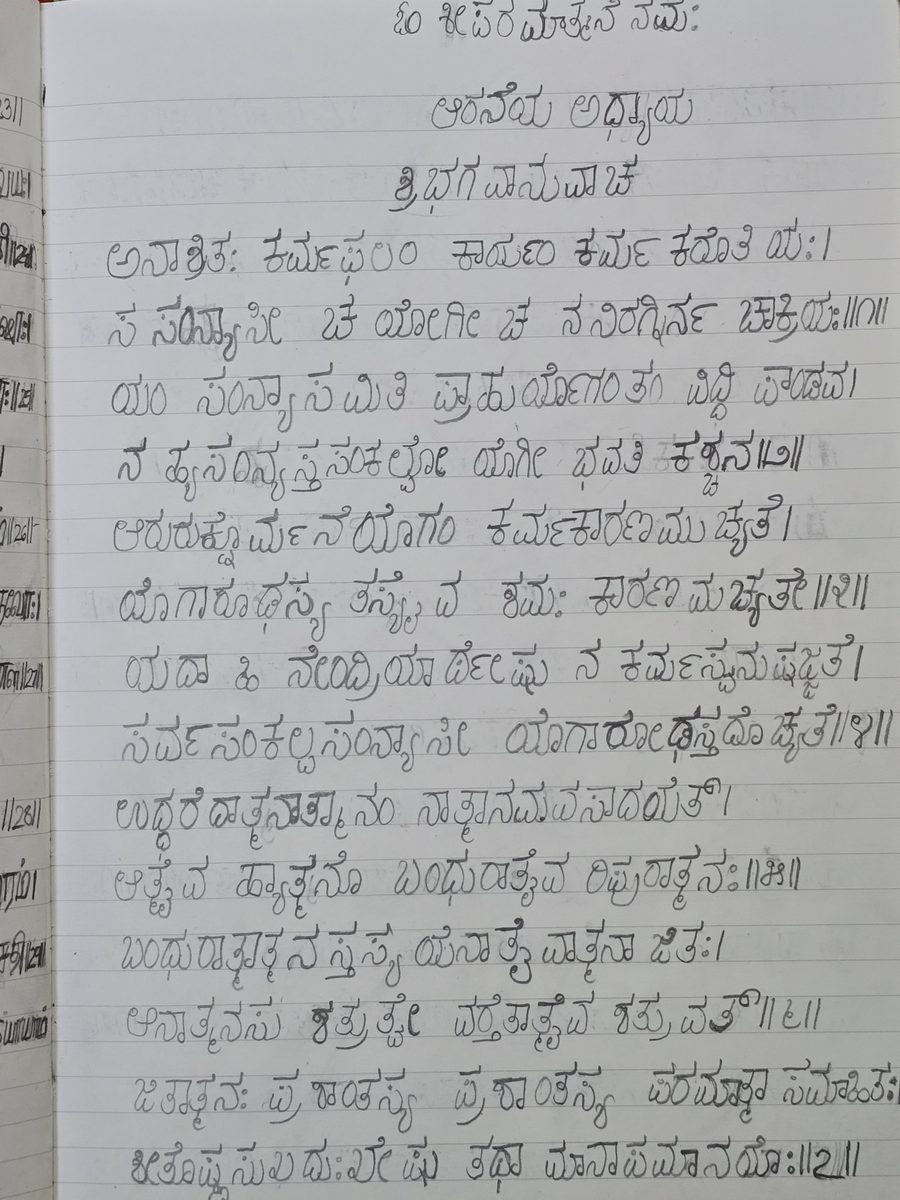
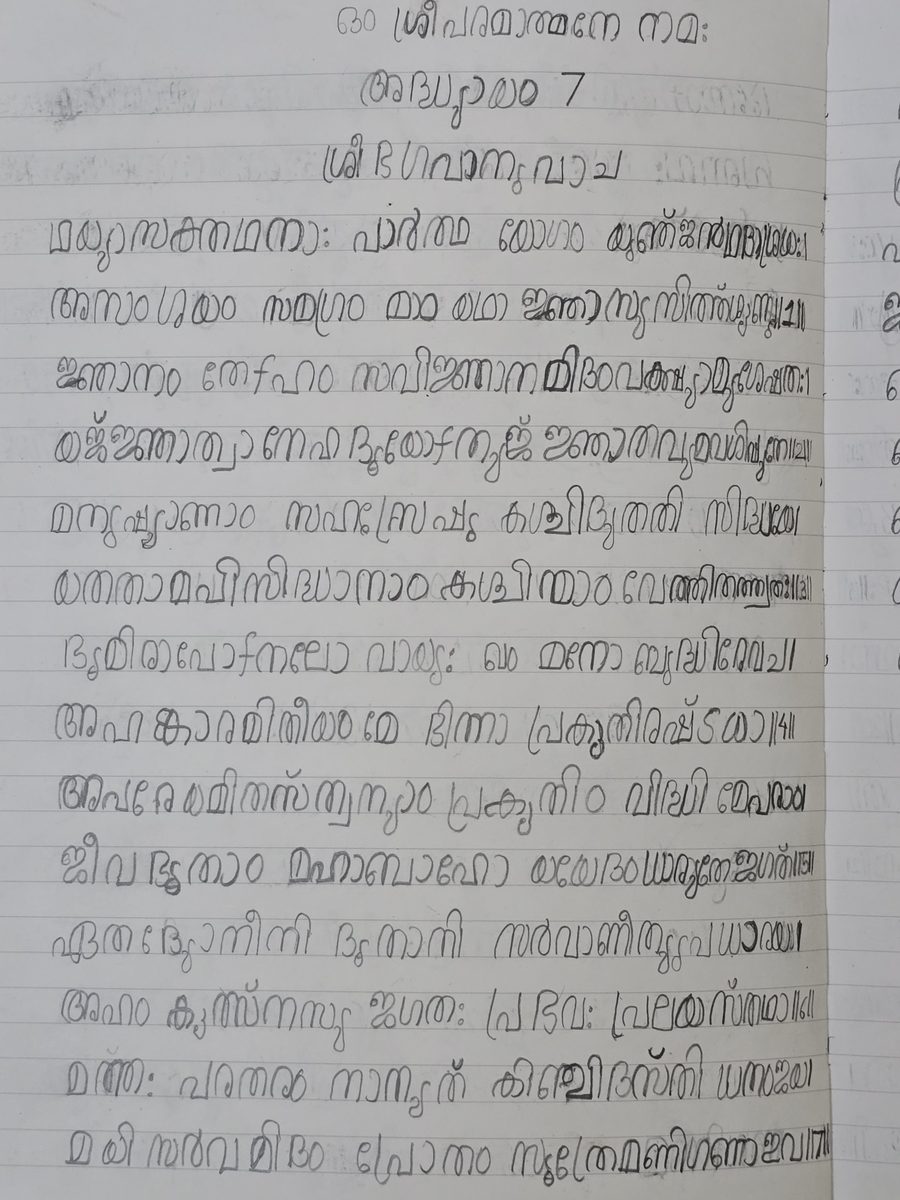
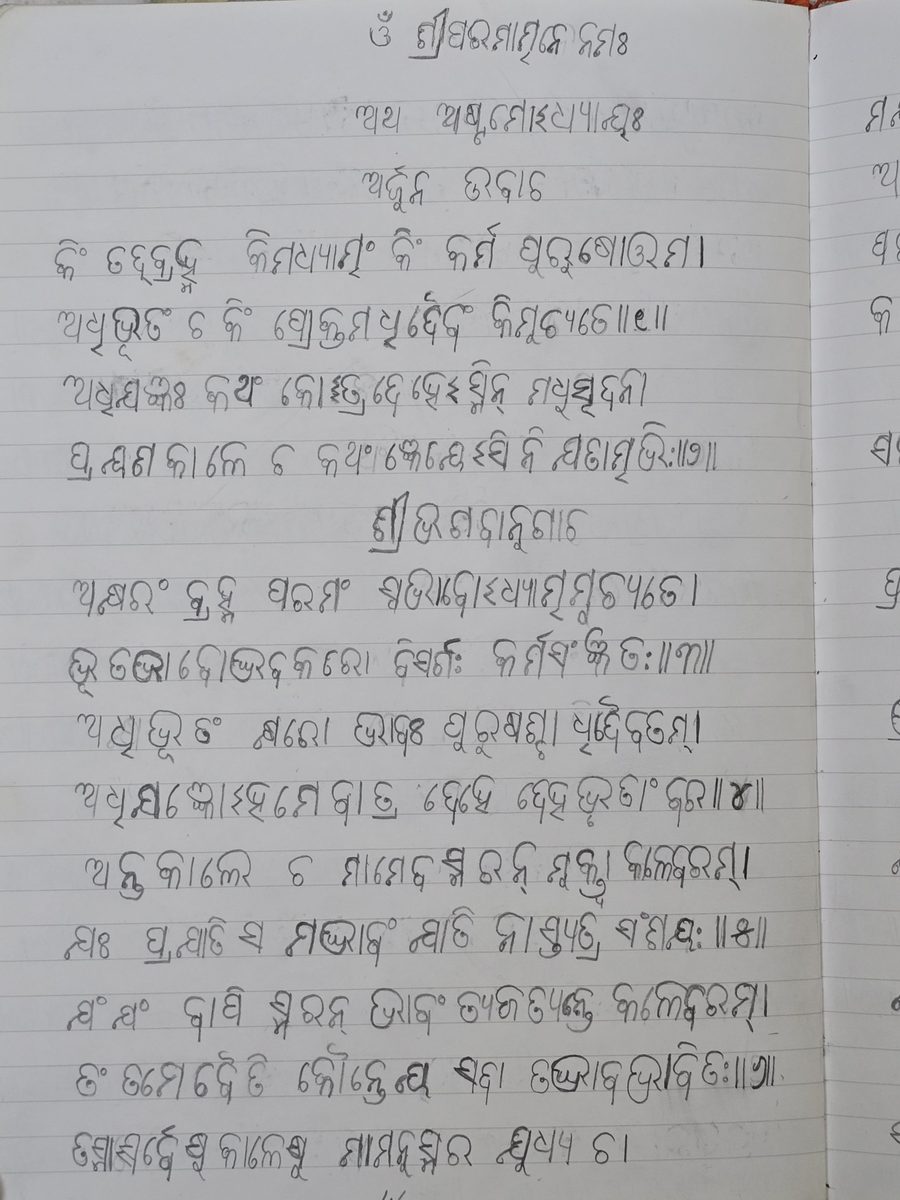
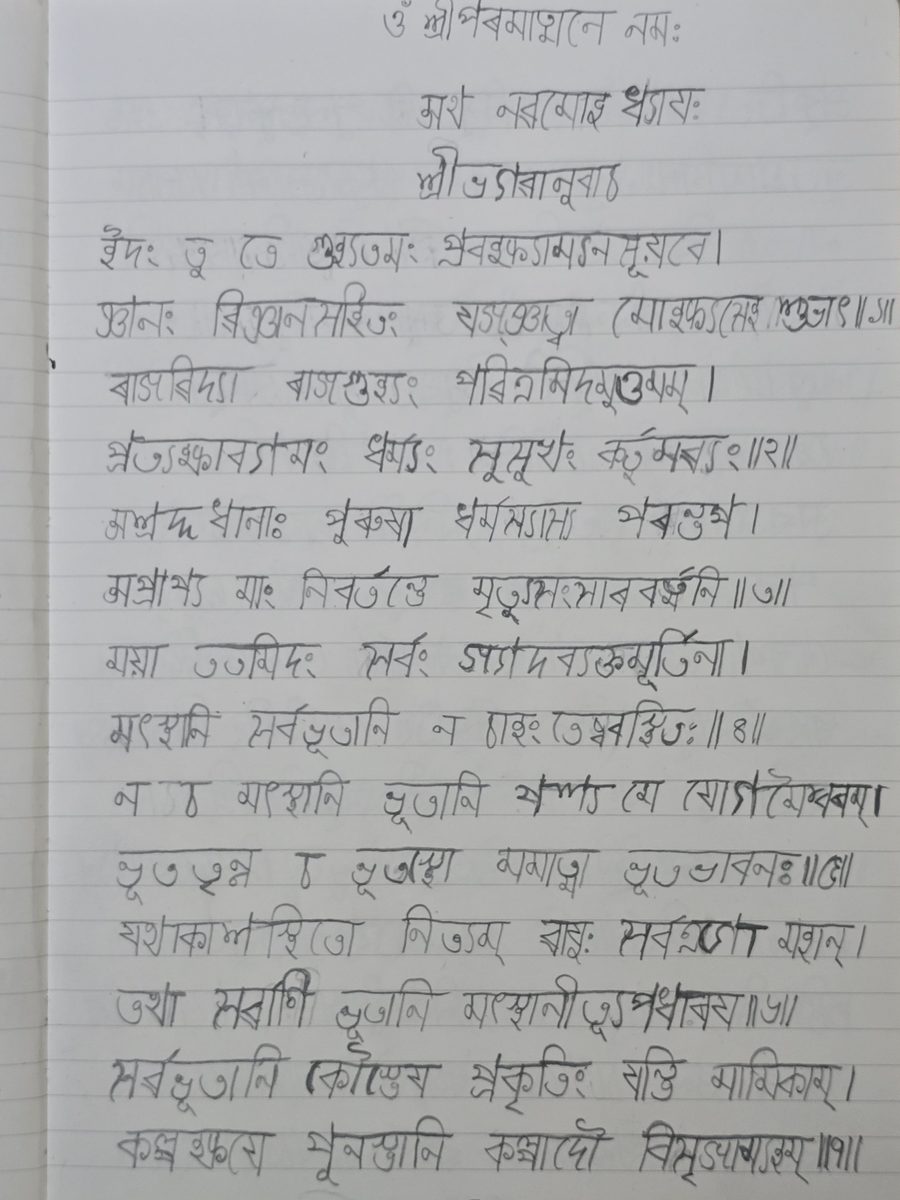
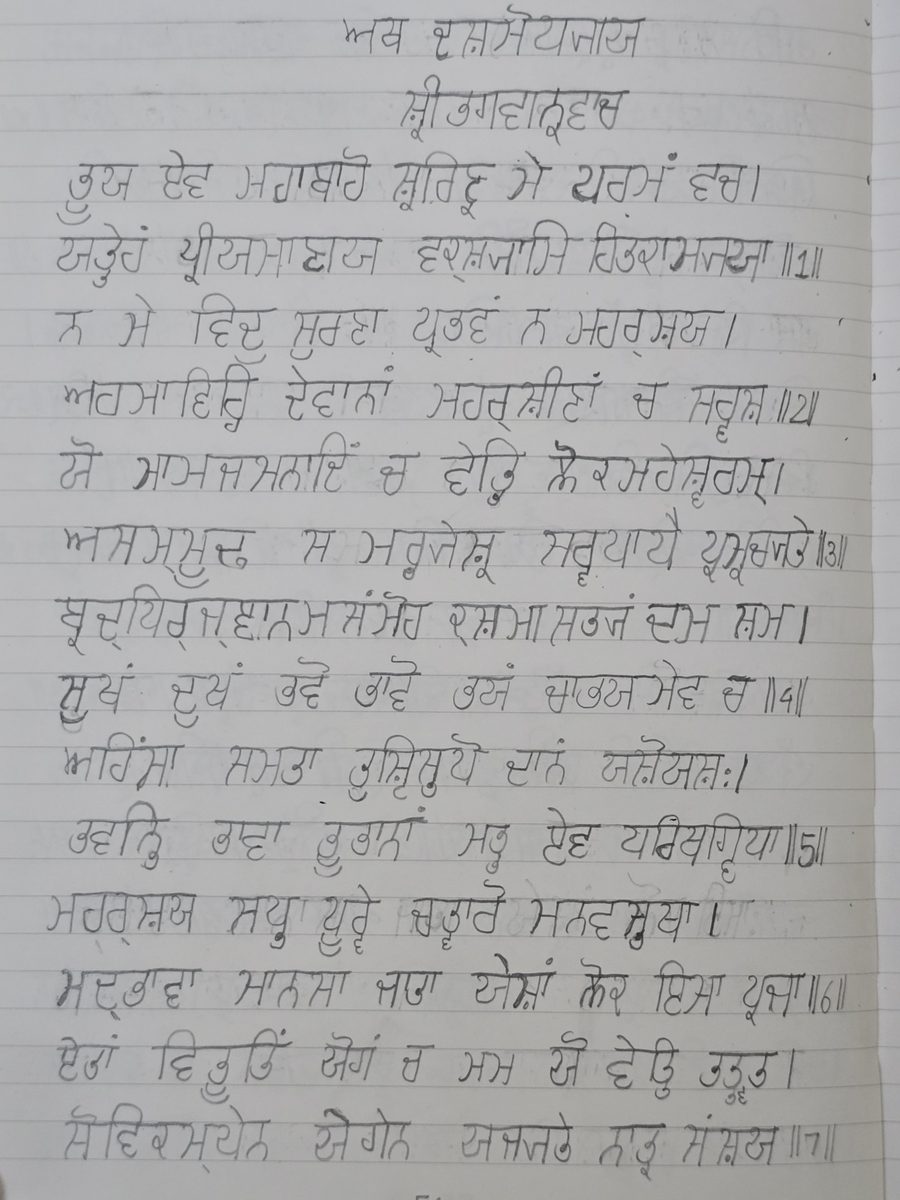
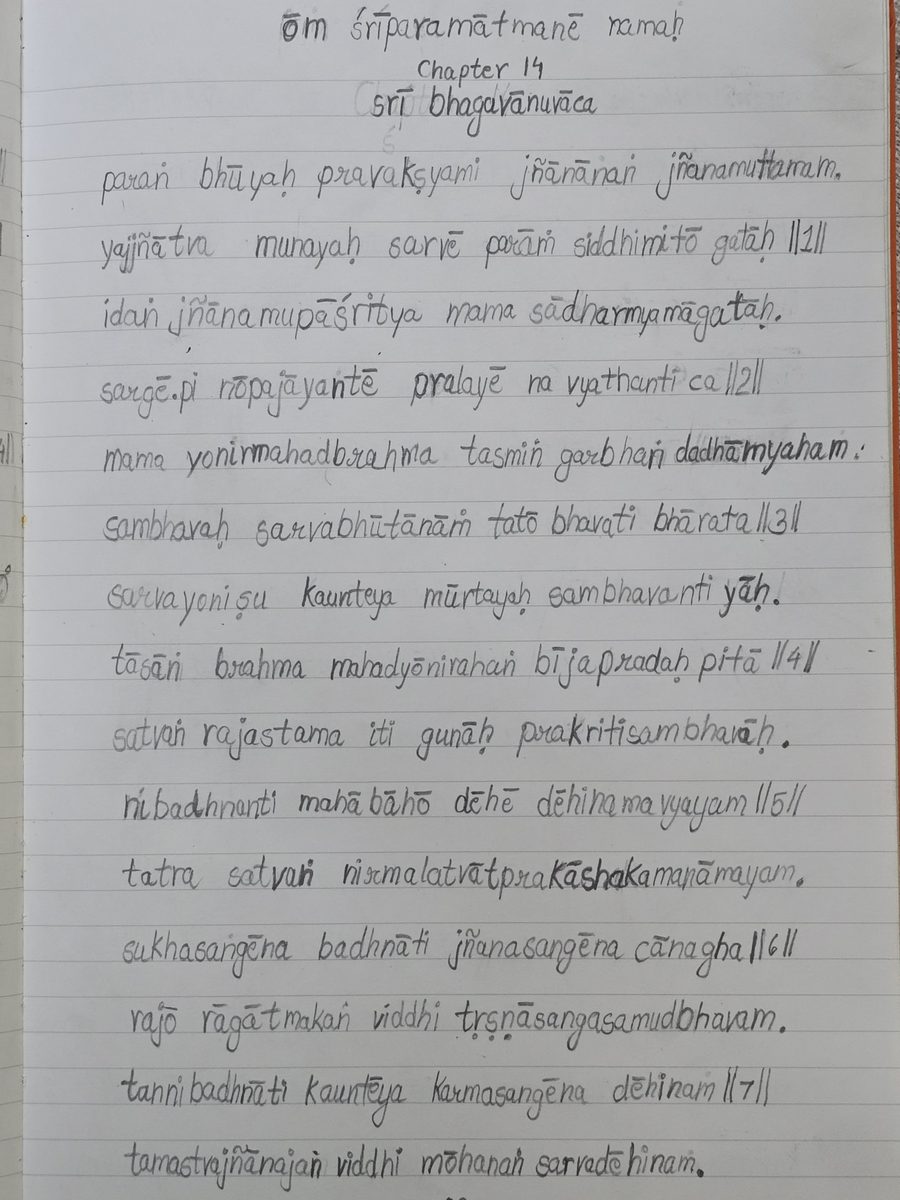
Each page is from one of the three complete manuscripts. Chapter numbers are as written on the page itself.

Composition
Not only reciting Sanskrit. Writing it.
In June 2026 he composed a प्रशस्ति, a formal eulogy, in ten Sanskrit verses, and wrote it out by hand with the corner ornaments drawn in.
Composing metrical Sanskrit is a different discipline from reciting it. It requires the grammar to be available rather than merely remembered, which is the whole purpose of holding the अष्टाध्यायी in memory in the first place.
Languages
Spoken, read and written.
- Speaks
- Hindi, English, Sanskrit, Spanish, Kannada and Marwari
- Reads and writes
- Thirteen Indian scripts
- Handwritten Gītā
- Eleven of those scripts, complete
- Interviewed in
- Sanskrit, Hindi and English, by the national broadcaster
On film
Recitation, in his own voice.
The chanting method is easier heard than described. The complete अष्टाध्यायी recitation is below, in full.